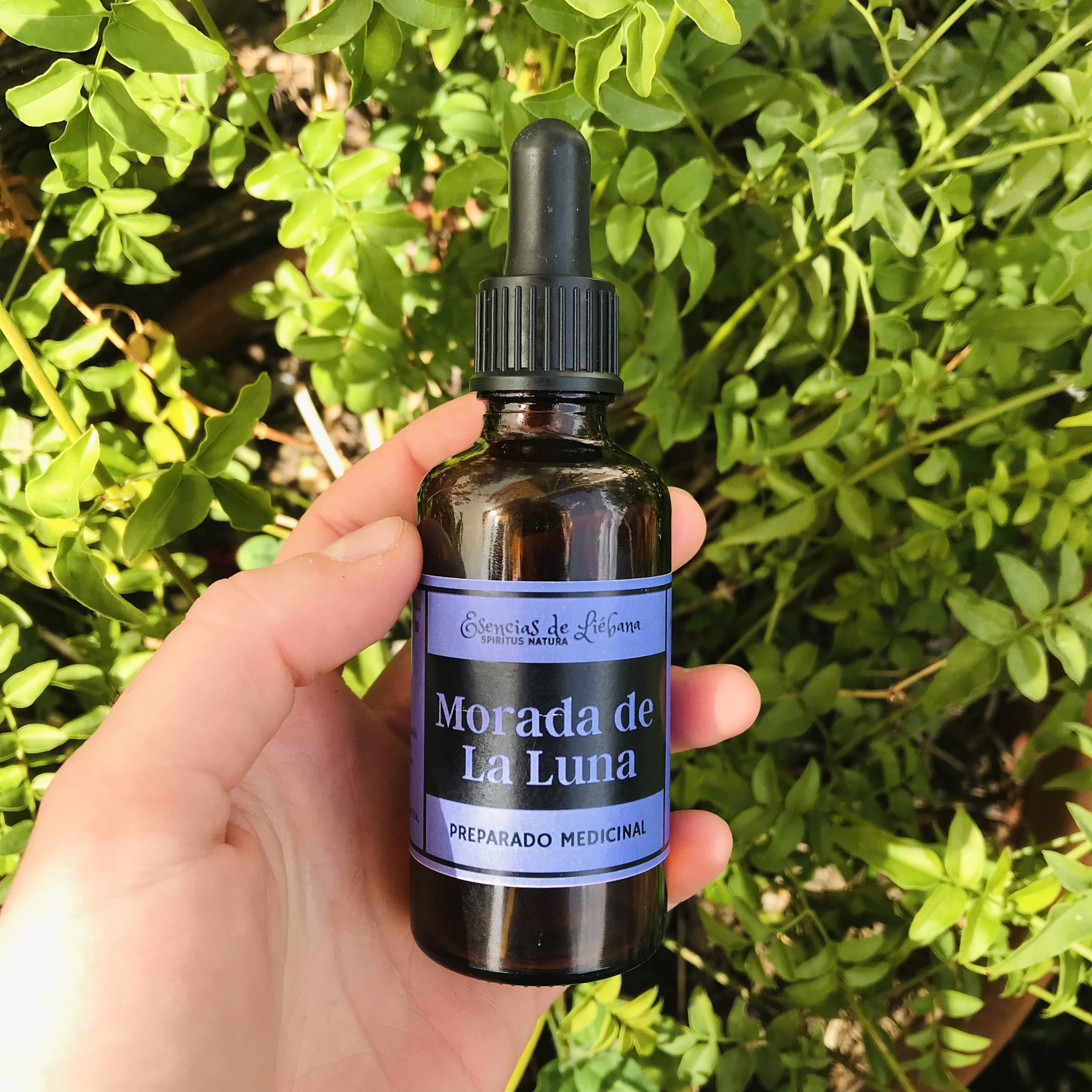
MORADA DE LA LUNA
20,00 €
Botanical formulation to balance the female hormonal cycle.
Oestrogen deficiency is one of the features of menopause and premenstrual syndrome. However, excessive exercise, a lack of body fat, the presence of eating disorders and a “lack of reconciliation with the feminine principle” can cause the levels of these compounds to fall and symptoms or disorders to appear.
A course of plants with a high phytoestrogen content (compounds similar to our own oestrogens), such as sage, yarrow or alfalfa, is without doubt less dangerous than orthodox oestrogen-based treatments, which are frequently implicated in the appearance of serious diseases of the reproductive system. These plants help to ease many disorders, especially those related to mood.
The main player in this botanical formulation is chaste tree, or vitex. It has been used for more than two thousand years and is Mediterranean in origin. Its properties for the female reproductive system are unquestionable.
The use of Vitex agnus-castus is related to hypoestrogenism and the lack of balance between oestrogen and progesterone.
The short-term consequences of hyperestrogenism are varied symptoms such as breast tenderness, fluid retention, weight gain, acne, premenstrual syndrome and changes to the menstrual cycle (in both amount and frequency)… There is also a change in mood, with irritability, anxiety, compulsive increases in appetite and a certain level of depression.
In the long term, hyperestrogenism increases the risk of varicose syndrome, ovarian cysts, endometrial changes (from hyperplasia to endometrial cancer), an increase in the number and size of fibroids, breast changes (mastopathy, fibroadenomas, cancer…), skin changes (acne, hirsutism…), a decrease in libido and altered fertility.
Vitex has the following actions:
- It stimulates the secretion of dopamine in the anterior pituitary: it lowers prolactin by reducing its synthesis and release, and does not affect FSH or LH levels.
- It increases progesterone levels in the luteal phase of the cycle.
- It also acts on the alpha and beta oestrogen receptors and on the opioid receptors.
- Antibacterial, antioxidant and immunomodulatory activity.
- It improves the length of menstrual cycles by promoting ovulation in women with anovulatory cycles: polycystic ovaries, perimenopause, etc.
- It reduces premenstrual syndrome, abdominal bloating, fluid retention, mastodynia (breast pain), the irregular and heavy bleeding some women experience, headaches and fatigue.
- It relieves mood changes such as irritability and anxiety.
- It improves symptoms in perimenopause.
- It may improve mild hyperprolactinaemia.
This formulation contains essential oils of mint, clary sage and niaouli, which harmonise a woman’s hormonal system.
MENOPAUSE AND THE CLIMACTERIC
Menopause is the definitive end of menstruation, while the climacteric is the transition phase between fertile life and true menopause. It is during the climacteric that physical and psychological manifestations appear, determined physiologically by the end of ovarian function.
Menopause marks the end of reproductive life, while the climacteric refers to all the phenomena that the evening of that life brings with it. The climacteric is a period of endocrine readjustment, since there is a change in the activity of the endocrine glands, above all the pituitary, the thyroid and the adrenals.
MENOPAUSE: THE THRESHOLD OF WISDOM
The Spanish version of this page continues with a passage on menopause as a threshold towards spiritual maturity, taken from the book Madre Tierra, Hermana Luna by Clara Castellotti.
I am pleased to be able to guide and support health improvement processes through my knowledge. All the information shared on this website is for guidance purposes only and is offered in good faith, based on various sources and both personal and external research related to Esencias de Liébana.
The information provided does not replace the opinion of qualified medical professionals, nor is it intended to diagnose or offer a cure for any health condition.
- Chaste tree (sp. Vitex agnus-castus)
- Sage (sp. Salvia officinalis)
- Yarrow (sp. Achillea millefolium)
- Alfalfa (sp. Medicago sativa)
- Red clover (sp. Trifolium pratense)
- Thyme (sp. Thymus mastichina)
- Mugwort (sp. Artemisia vulgaris)
- Nettle (sp. Urtica dioica)
- Essential oils of Mentha piperita, Salvia sclarea and Melaleuca quinquenervia.
- Homemade pomace spirit 60%
*Ingredients from certified organic farming, or uncertified but from known sources that respect our environment. *All the botanicals have been gathered by hand in the Liébana Valley, with respect and gratitude, following the biodynamic lunar calendar.
Dosage:
- Climacteric: 20 drops, 3 to 5 times a day, diluted in a little water. Take until the symptoms disappear.
- Menopause: 20 drops, 3 times a day, diluted in a little water. Take for three months and rest for one.
- Premenstrual syndrome: take 20 drops once a day during the 3rd week of the menstrual cycle, and 20 drops 3 times a day during the 4th week.